


Industrial Ball Valves from a European Ball Valve Manufacturer
KTN Valves is a Spanish ball valve manufacturer. We machine industrial ball valves from DN8 to DN300 in AISI 316, carbon steel, bronze and titanium. Seats are PTFE or lapped metal, designs floating or trunnion, ratings 1000 WOG to ANSI class 2500. Every valve carries a blowout proof stem as standard.
Filter
Showing 13–24 of 24 results
-

TRUNNION BALL VALVE METAL SEATED
-

BALL VALVE LUG TYPE METAL SEATED
-

BALL VALVE BSP/NPT THREAD WITH NIPPLES INTEGRATED
-

BALL VALVE WAFER TYPE METAL SEATED
-
BALL VALVE WAFER TYPE METAL SEATED CLASS 600/900
-

JACKETED BALL VALVE LUG TYPE METAL SEATED
-

TRUNNION BALL VALVE METAL SEATED CLASS UP TO 2500
-

DIN BALL VALVE 3 WAY FULL BORE
-

SANITARY BALL VALVE WITH CLAMP ENDS
-

BALL VALVE, PFA LINED, DIN FLANGES, FULL BORE
-

BALL VALVE 2-PIECE ANSI FLANGED FLANGES IN CARBON STEEL
-
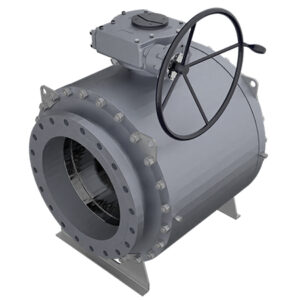
TRUNNION BALL VALVE
Ask a quotation
Request a quote for ball valves: tell us the DN, material, mounting type (wafer, lug or clamp), seat, pressure and temperature and we will send you a customized offer with the best price and lead time.
Ball valves
GENERAL DESCRIPTION
Specification | KTN industrial ball valve range | Standard or reference |
|---|---|---|
Valve type | Quarter turn ball valve, floating or trunnion mounted | API 608, ASME B16.34 |
Size range | DN8 to DN300 (1/4″ to 12″); flanged executions to DN200 (8″) | EN 1092-1, ASME B16.5 |
Pressure rating | 1000 WOG threaded; PN16, PN25, PN40; ANSI class 150 to 2500 | ASME B16.34, DIN 3357-2, EN 12516-1 |
Body and cover | CF8, CF8M, WCB, carbon steel, bronze, titanium, PFA lined | Grades stated on the material certificate |
Ball and stem | F304, F316, A276-304, A276-316; chrome, stellite or tungsten carbide hardfacing | Hardfacing quoted per service |
Seats | PTFE, PTFE + 15 % GF, PTFE + 15 % CF, TFM1600, RPTFE, pentafite, lapped metal | Selected on fluid and temperature |
Shut-off | Class VI | ANSI/FCI 70-2 |
Bore | Full port as standard, reduced port on request | Stated on the order |
End connections | BSP, NPT, socket weld, DIN flange, ANSI flange, wafer, sanitary clamp | ISO 228, EN 10226, ASME B1.20.1, ASME B16.11, EN 1092-1, ASME B16.5, DIN 11850 |
Face to face | ANSI and DIN series | ASME B16.10, EN 558 series 27/1 |
Testing | Shell and seat test on every valve | API 598, EN 12266 |
Safety features | Blowout proof stem and spring antistatic device as standard; fire safe on request | API 607, API 6FA |
Actuation interface | Top flange for lever, gearbox, pneumatic or electric actuator | ISO 5211 |
Quality | ISO 9001, Bureau Veritas inspection, certificate of origin, 3.1 material certificate on request | EN 10204 3.1 |
Manufacture | Machined and assembled in Rubí, Barcelona, Spain | Made to catalogue or to drawing |
Ball valve overview
KTN manufactures the complete ball valve family in one plant, from DN8 instrument valves to DN300 flanged bodies. Every valve isolates in a quarter turn: ninety degrees of stem travel moves the drilled ball from closed to open, and a full port bore then adds almost no head loss to the line.
Three seat families cover nearly every duty. PTFE and its filled grades handle water, compressed air, oils, general chemistry and food process up to PN40 and class 300. Lapped metal seats take the same designs into steam, thermal oil, abrasive slurry and classes to 2500. A lined body keeps aggressive acids and chlorides off the steel. Fluid, temperature and class choose the seat; the end connection only decides how the valve joins the pipe.


How to choose an industrial ball valve
Seven decisions define the valve, and each one narrows the one after it. Work through them in this order and the specification writes itself.
- Fluid and temperature. PTFE for water, air, oils, general chemicals and food. A lapped metal seat for steam, thermal oil, hot hydrocarbons and solids. A PFA lined body for acids, chlorides and solvents.
- Pressure class or PN. Threaded valves are rated 1000 WOG to DN50, which is 69 bar. Flanged bodies run PN16 to PN40 or class 150 and 300. Guided ball designs reach class 2500.
- Bore. Full port keeps the nominal diameter, minimises pressure drop and passes a pig. Reduced port drops one size and cuts weight, torque and price.
- Floating or trunnion. Floating designs suit sizes up to roughly DN150 and class 600. Above that a trunnion mounted ball keeps operating torque low and constant.
- Body construction. One piece cannot be opened. Two piece split bodies come apart on the bench. Three piece bodies allow a seat change with both ends still welded or screwed into the line.
- End connection. Thread, socket weld, ANSI flange, DIN flange, wafer body or sanitary clamp ferrule, according to the piping already installed.
- Actuation. Size the actuator on breakaway torque with a margin, never on nominal torque. A metal seat and a higher class both raise that figure.
Convert imperial sizes with the DN to inches conversion table. Check the sealing face against the flange faces types and function guide before fixing a class or a PN.
Applications and sectors
KTN ball valves work in petrochemical, chemical and oil and gas plants. Hydrocarbon service is where fire safe construction to API 607 or API 6FA is specified, and where the antistatic device stops charge building on the ball. Power generation, steam headers and thermal oil circuits take hardfaced balls and lapped seats, because PTFE survives neither the temperature nor the particles.
Water treatment and desalination plants use AISI 316 bodies against chlorides. Food, beverage, pharmaceutical and cosmetics lines use the 316L sanitary series polished to Ra 0,8 µm, described under sanitary clamp end ball valves. Pulp and paper, mining, marine and HVAC complete the list.
Ball valve types and executions we manufacture
KTN manufactures six body styles under the same design rules, tested to API 598 and EN 12266. The table compares them by connection, size, rating and duty. Each row links to the page that carries the full range, materials and executions for that connection.
| Type | Connection and standard | Size range | Rating | Body, ball and seat | Choose it when |
|---|---|---|---|---|---|
| Threaded, BSP, NPT and socket weld | Thread to ISO 228 or EN 10226, NPT to ASME B1.20.1, socket weld to ASME B16.11 | DN8 to DN50 (1/4″ to 2″) | 1000 WOG; socket weld class 800 | AISI 316, carbon steel or bronze, PTFE seat | Instrument, utility and small process lines, in 1, 2 or 3 piece construction |
| DIN flanged | Flange to EN 1092-1, flat or raised face, ISO 7005 where it applies | DN15 to DN300 | PN16, PN25, PN40 | AISI 316, carbon steel or PFA lined body, PTFE seat | The plant is piped to European flange standards, or the fluid needs a lined body |
| ANSI flanged | Flange to ASME B16.5 raised face, face to face ASME B16.10 | To DN200 (8″) | Class 150 and 300 | CF8, CF8M or WCB, F316 ball, PTFE seat | The line list is written in ANSI classes, or the project exports to an American specification |
| Wafer type | Clamped between EN 1092 or ASME B16.5 flanges on the joint bolts | To the flange standard on the enquiry | PN16 to PN40; class 600 and 900 with a metal seat | AISI 316 body and ball, PTFE or lapped metal seat | Space between flanges is tight and weight matters; never at the end of a line |
| Metal seated, floating and trunnion | Flanged, wafer or lug bodies; threaded with integral trunnions | Floating and trunnion, DN15 upwards | Up to ANSI class 2500 | AISI 316 or cast carbon steel, ball hardfaced in chrome, stellite or tungsten carbide | Temperature, abrasion or class puts the duty outside the PTFE window |
| Sanitary clamp ends | Clamp ferrule to DIN 11850 (KTN series 191) | Sanitary line sizes | PN-10, −20 °C to +180 °C | 316L / CF3M polished to Ra 0,8 µm, PTFE seat, EPDM seals | The line is cleaned in place and has to be stripped by hand without tools |
Executions cross the six styles. Two way and three way L or T port, full or reduced bore, one, two or three piece bodies and lined constructions are quoted inside the limits above.
What a ball valve is and how it works
A ball valve is a quarter turn isolating valve in which a drilled sphere rotates between two seats. At ninety degrees the bore lines up with the pipe and the valve is open. At zero the solid face of the ball presses on the seats and the line is shut. A ball valve throttles badly and wears its seat when held part open.
Body construction decides maintenance cost over the valve life. A three piece body opens at the centre, so seats are replaced with both end connections still in the pipework. A two piece split body comes apart on the bench. A one piece body is replaced rather than repaired.
Three way valves add a second outlet. An L port diverts between two lines. A T port mixes or splits and, in some positions, connects all three ways. Ordering L where the process needed T is the most frequent specification error on enquiries.
How the ball is supported
In a floating design the ball is held only by the seats. Line pressure pushes it onto the downstream seat and that contact seals, simply and tightly, but torque climbs with diameter and class. In a mounted design an upper and a lower shaft fix the ball and spring loaded seats move against it, so torque stays low and constant. In practice the switch happens somewhere around DN150 and class 600.
Blowout proof stem and antistatic device
A blowout proof stem is assembled from inside the body, with a shoulder that bears on a machined face inside it. Line pressure drives the stem against that face, so it cannot be ejected if the packing fails or the gland nut is removed under pressure. The antistatic device is a spring or pin holding electrical continuity between ball, stem and body. Without it, a ball turning on PTFE collects charge, and in hydrocarbons that charge ignites. KTN fits both as standard.
Ball valve materials, balls and seats
KTN casts and machines bodies in CF8 and CF8M stainless steel, WCB cast carbon steel, bronze, titanium and PFA lined constructions. Balls and stems are supplied in F304, F316, A276-304 and A276-316, hardfaced in hard chrome, stellite or tungsten carbide for abrasive service. Sanitary bodies are 316L and CF3M, polished internally to Ra 0,8 µm. The seat sets the service window, so fix that line of the material specification first.
| Seat | Typical fluids | Service window | Shut-off | Operating torque | Avoid for |
|---|---|---|---|---|---|
| PTFE (standard) | Water, compressed air, oils, general chemicals, food process | General service to PN40 and ANSI class 300 | Class VI to ANSI/FCI 70-2 | Lowest of the range | Steam, thermal oil, abrasive solids |
| PTFE + 15 % GF or 15 % CF, RPTFE | The same fluids at higher differential pressure or mechanical load | Wider than virgin PTFE on pressure and creep | Class VI to ANSI/FCI 70-2 | Slightly above virgin PTFE | Ultra pure duties where fillers are not accepted |
| TFM1600 | Chemical process asking for a tighter, less porous polymer | Confirmed against the compound data sheet per project | Class VI to ANSI/FCI 70-2 | Comparable to reinforced PTFE | Duties outside the compound data sheet |
| Pentafite | Chemical and mechanical duty beyond the PTFE limit | Above the virgin PTFE window, confirmed per project | Class VI to ANSI/FCI 70-2 | Higher than PTFE | Services the data sheet does not cover |
| Lapped metal to metal | Steam, thermal oil, hot hydrocarbons, slurry, abrasive media | Up to ANSI class 2500 with a hardfaced ball | Class VI to ANSI/FCI 70-2 on lapped seats | Highest; size the actuator on this figure | General service where PTFE is cheaper and sufficient |
| PFA lined body | Acids, chlorides, solvents and aggressive chemistry | Limited by temperature and vacuum, not by corrosion | Set by the seat fitted inside the lined body | As the internal seat | Vacuum or thermal cycling outside the stated limits |
Fire safe construction to API 607 or API 6FA is available for hydrocarbon service: a secondary metal seat takes over containment once fire has destroyed the polymer. Where a duty sits at the edge of the PTFE window, the metal seat ball valves carry the lapped metal executions and the hardfacing options. An EN 10204 3.1 certificate with heat numbers is issued on request. That is the document most ball valve material specifications ask for.
Connections, standards and actuation
Threads follow BSP to ISO 228 and EN 10226, NPT to ASME B1.20.1 and socket weld to ASME B16.11 class 800, all covered by the threaded range. BSP and NPT are not interchangeable: the pitch and the thread angle are different, and forcing one into the other destroys the seal. Flanges follow EN 1092-1 in PN16, PN25 and PN40 on the DIN flanged range, and ASME B16.5 in class 150 and 300 on the ANSI flanged range. Face to face follows EN 558 series 27/1 and ASME B16.10 respectively.
| DN | Inches | ANSI class | PN (DIN) | Cold working pressure | KTN end connections available |
|---|---|---|---|---|---|
| DN15 | 1/2″ | 150 / 300 | PN16 to PN40 | 1000 WOG threaded; 285 psi at class 150 | BSP, NPT, socket weld, DIN flange, ANSI flange, wafer, clamp |
| DN50 | 2″ | 150 / 300 | PN16 to PN40 | 1000 WOG threaded; 740 psi at class 300 | BSP, NPT, socket weld, DIN flange, ANSI flange, wafer, clamp |
| DN65 | 2 1/2″ | 150 / 300 | PN16 to PN40 | 232 psi at PN16; 285 psi at class 150 | DIN flange, ANSI flange, wafer, clamp |
| DN80 | 3″ | 150 / 300 / 600 / 900 | PN16 to PN40 | 580 psi at PN40; 1480 psi at class 600 | DIN flange, ANSI flange, wafer, lug |
| DN100 | 4″ | 150 / 300 / 600 / 900 | PN16 to PN40 | 740 psi at class 300; 2220 psi at class 900 | DIN flange, ANSI flange, wafer, lug |
| DN150 | 6″ | 150 to 2500 (guided ball) | PN16 to PN40 | 363 psi at PN25; 6170 psi at class 2500 | DIN flange, ANSI flange, wafer, lug, trunnion |
| DN200 | 8″ | 150 to 2500 (guided ball) | PN16 to PN40 | 580 psi at PN40; 6170 psi at class 2500 | DIN flange, ANSI flange, lug, trunnion |
Those cold working figures are the ASME B16.34 group 1.1 values at 38 °C for cast carbon steel; an AISI 316 body derates to 275 psi at class 150 and 720 psi at class 300. In bar, PN16 is 232 psi, PN25 is 363 psi, PN40 is 580 psi, and 1000 WOG is 69 bar. Ratings fall as temperature rises, so state the design temperature with the class on the enquiry.
Every KTN ball valve carries an ISO 5211 top flange. A lever, a lockable handle, a gearbox or a pneumatic or electric actuator bolts on without an adapter plate. Assembled packages are listed under valve automation, and levers, gearboxes and spares under valve accessories.
Buying ball valves direct from the manufacturer
KTN sells from its own plant, so no distributor margin sits between the casting and the order. A special is machined to your drawing instead of refused. A ball valve price depends on five things: size, pressure class, body and ball material, seat type, and manual or actuated operation. Material and class move the figure far more than the connection does.
To quote an industrial ball valve, KTN needs eight data points:
- Nominal size in DN or inches
- End connection: BSP or NPT thread, socket weld, ANSI flange, DIN flange, wafer or clamp
- Pressure class, PN or WOG rating, with the design temperature
- Body material
- Ball and stem material, and hardfacing if the service is abrasive
- Seat: PTFE, reinforced PTFE, TFM1600, pentafite or lapped metal
- Bore and configuration: full or reduced port, two way, or three way L or T
- Manual or actuated, with the signal and supply available
Send those eight lines and you get a firm price with the specification data sheet for the valve quoted. Replacements are also built to drawing: send the reference stamped on the valve already installed and KTN quotes a dimensional equivalent. Every order carries a certificate of origin, with an EN 10204 3.1 material certificate on request and Bureau Veritas inspection when the project calls for it.
Use the KTN contact page or call +34 937 818 219 from 8:00 to 19:00 CET. Buyers outside Spain are supplied direct from the factory, and companies looking to resell the range in their market should read the KTN distributor page before enquiring.
Why choose KTN as your ball valve manufacturer
KTN Valves (Kara Technology News, S.L.) is a Spanish manufacturer based in Rubí, Barcelona, at Ctra. Rubí-Sabadell km 13, nave 7, 08191, working under ISO 9001. The same shop that machines the catalogue range machines a one-off body, which is what separates a manufacturer from a stockist reselling imported valves.
Manufacturing inside the European Union keeps traceability real. Heat numbers, material certificates and the certificate of origin travel with the valve, and Bureau Veritas inspects when the specification requires a third party. Common sizes are held in stock; non standard bodies and bores are quoted against a drawing.
Related valve categories
Ball valves are one family in the KTN industrial valves catalogue. Compare them with the alternatives before fixing the specification.
- Butterfly valves: choose them above DN150 to DN200, where a wafer or lug butterfly weighs and costs far less than a ball valve of the same bore.
- Globe valves: choose them for throttling and for fine flow adjustment, which a ball valve does badly and pays for with seat wear.
- Control valves: choose them when the loop needs modulation with a positioner and a control signal rather than open or shut isolation.
- Gate valves: choose them on long, rarely operated lines where a rising stem and a low pressure drop matter more than quarter turn speed.
- Check valves: choose them to stop reverse flow automatically, since a ball valve seals in both directions but only when someone turns it.
Send KTN the size, connection, class, fluid and seat and the factory returns a quotation with the data sheet, or call +34 937 818 219.
Frequently asked questions
Which are the best industrial ball valves for my line?
The best industrial ball valve is the one matched to fluid, temperature and class. PTFE seats suit water, air, oils and food service to PN40 or class 300. Lapped metal seats suit steam, thermal oil and abrasion to class 2500. Above DN150 a trunnion mounted ball keeps torque low. KTN manufactures all of those executions in one plant.
Can KTN supply a ball valve specification data sheet?
Yes. Every KTN quotation is issued with the specification data sheet of the valve quoted: size, class or PN, body, ball and stem grades, seat compound, bore, face to face standard, shut-off class, test standard and ISO 5211 flange. Send size, connection, class, fluid and seat, and the data sheet comes back with the price.
What ball valve material specification do you manufacture to?
Bodies are CF8, CF8M, WCB, carbon steel, bronze, titanium or PFA lined. Balls and stems are F304, F316, A276-304 or A276-316, with chrome, stellite or tungsten carbide hardfacing on request. Seats are PTFE, PTFE with 15 % glass or carbon fibre, TFM1600, RPTFE, pentafite or lapped metal. An EN 10204 3.1 certificate is issued on request.
How do I get a ball valve price from the factory?
Send eight items: size in DN or inches, end connection, pressure class or PN with design temperature, body material, ball and stem material, seat type, bore and configuration, and manual or actuated operation. Use the KTN contact form or call +34 937 818 219 between 8:00 and 19:00 CET. Prices are quoted direct, with no distributor margin.
Are you a ball valve manufacturer or a distributor?
KTN Valves is a manufacturer. Casting, machining, assembly and testing to API 598 and EN 12266 happen in the KTN plant in Rubí, Barcelona, under ISO 9001, with Bureau Veritas inspection on request. That is why non standard bores, materials and bodies are quoted to drawing, and why every order carries a certificate of origin.
What size and pressure range do your industrial ball valves cover?
DN8 to DN300, which is 1/4″ to 12″. Threaded valves run DN8 to DN50 at 1000 WOG. Flanged bodies run PN16, PN25 and PN40 or ANSI class 150 and 300, up to DN200. Metal seated and guided ball designs reach ANSI class 2500. Shut-off is class VI to ANSI/FCI 70-2 across the range.
Can you manufacture an equivalent to a ball valve from another manufacturer?
Yes. Send the reference stamped on the installed valve, or its drawing, and KTN quotes a dimensional and functional equivalent: same face to face, same flange drilling, same ISO 5211 interface, with the materials and seat you specify. Made to drawing production is standard practice here, and replacement units carry the same certificates as catalogue valves.