


ANSI Flanged Ball Valves: cast steel manufacturer in class 150 and class 300

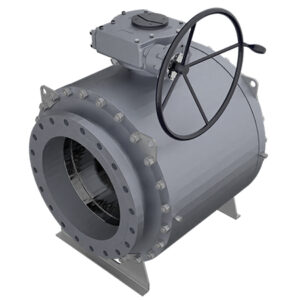
KTN Valves manufactures ANSI flanged ball valves in cast steel to API 608 and ASME B16.34, in class 150 and class 300, from 1/2″ (DN15) to 8″ (DN200). Bodies are cast in CF8, CF8M or WCB, ball and stem in F304 or F316, with PTFE or TFM1600 seats, full port as standard, blow-out proof stem and antistatic device.
| Quick specification | ANSI flanged ball valve |
|---|---|
| Sizes | 1/2″ (DN15) to 8″ (DN200), flanged |
| Pressure classes | ANSI class 150 and class 300; also PN16 to PN100 and JIS 10K depending on execution |
| Flange standard | ANSI/ASME B16.5, raised face |
| Design standard | API 608 and ASME B16.34; equivalences DIN 3357-2 and EN 12516-1 |
| Face to face | ASME B16.10 |
| Body and bonnet | Cast steel: CF8, CF8M (stainless) and WCB (cast carbon steel) |
| Ball and stem | F304, F316, A276-304, A276-316 |
| Seats | PTFE, PTFE+15 % GF, PTFE+15 % CF, TFM1600, RPTFE |
| Bore | Full port as standard; reduced bore on request |
| Construction | 2-piece split body; floating ball or trunnion mounted |
| Testing | API 598 and EN 12266 |
| Safety | Fire safe API 607, blow-out proof stem, spring-loaded antistatic device |
| Actuation | Lever, lockable lever or actuator on an ISO 5211 pad |
Category overview
An ANSI flanged ball valve is the flanged execution drilled to ANSI/ASME B16.5, the pattern that refining, petrochemical and oil & gas specifications call for. KTN manufactures it as a cast steel ball valve in class 150 and class 300, from 1/2″ (DN15) to 8″ (DN200), full port as standard.
The design follows API 608 and ASME B16.34, with face to face to ASME B16.10. Testing is API 598 and EN 12266, and European equivalences are DIN 3357-2 and EN 12516-1. Cast steel here means WCB, CF8 as cast 304 and CF8M as cast 316.
How to choose an ANSI flanged ball valve
Eight items close the specification.
- Flange standard. ANSI B16.5 or DIN EN 1092-1, with no adaptation possible. European pipework needs the DIN flanged ball valve.
- Pressure class. Class 150, written 150 lb on many drawings, for water, air and moderate process. Class 300 when pressure or temperature rises.
- Size. Up to 8″ (DN200). Cross an imperial drawing against the DN to inches conversion table.
- Body material. WCB for hydrocarbons, water and steam; CF8 or CF8M against corrosion.
- Seat. PTFE for general service, RPTFE or PTFE+15 % GF against abrasion, TFM1600 where creep matters.
- Bore. Full port keeps the nominal diameter and passes a pig; reduced bore lowers torque.
- Floating or trunnion. Floating to roughly DN150 and class 300, trunnion above that.
- Actuation. Lever, lockable lever or actuator on the ISO 5211 pad. See valve automation.
Applications and sectors
ANSI flanged ball valves are the on/off valve of any line built to American standards. KTN supplies them for refining, petrochemical and oil & gas, chemical process, power, steam and thermal oil, water treatment and desalination, food, pharmaceutical, pulp and paper, mining and marine.
Service decides the material: WCB in hydrocarbons and utilities, CF8M where chlorides would pit carbon steel in chemical, desalination and food plants. Temperature sets the other boundary. A PTFE seat works to about 180 °C; above that the same body takes a lapped seat from the metal seated ball valves range, which also covers class 600 and class 900.
Types and executions we manufacture
| Execution | What it is | When to choose it |
|---|---|---|
| 2-piece split-body full port, class 150 | Cast body plus bolted end cap, floating ball, bore equal to nominal size, ANSI B16.5 flanges | General process, utilities and hydrocarbons to 285 psi at ambient. The default flanged ball valve |
| 2-piece split-body full port, class 300 | Same construction with thicker walls, wider flange and more bolts | Higher design pressure or temperature, and any line specified 300 lb |
| Cast stainless, CF8 or CF8M | Cast 304 or cast 316 body and bonnet, F304 or F316 ball and stem | Corrosive fluids, chlorides, desalination, chemical and food duty |
| Cast carbon steel, WCB | WCB body and bonnet, stainless ball and stem | Water, air, steam, thermal oil and hydrocarbons where corrosion is not the driver |
| Trunnion mounted flanged | Ball fixed by upper and lower trunnions, spring-loaded seats that move against the ball | Larger sizes and higher classes, or where the actuator needs a low, constant torque |
2-piece split-body full port flanged ball valve, class 150 and class 300
The split body is the standard API 608 construction for a cast steel flanged ball valve. The main casting carries one flange and the seat pocket; the end cap carries the other and bolts to it. Undoing that joint on the bench reaches ball and seats without disturbing the stem packing.
Two pieces is the balance point on a flanged line. A one-piece body cannot be opened, and the three-piece body of the threaded ball valve range earns its cost by opening in situ, which a flanged valve never needs. Full port means the ball bore equals the nominal diameter: a 4″ valve has a 4″ hole, so a pig passes and pressure drop is negligible. Reduced bore is built on request.
What an ANSI flanged ball valve is and how it works
An ANSI ball valve closes by rotating a drilled sphere a quarter turn between two seats. With the bore aligned, flow is straight through; rotated 90°, the solid face meets both seats and the line is shut. In the floating design line pressure pushes the ball against the downstream seat. In the trunnion design the ball is pinned and spring-loaded seats move against it, which keeps torque low and constant.
Blow-out proof stem
A blowout proof stem ball valve is one whose stem cannot be ejected by line pressure. The stem is assembled from inside the body, never dropped in from the top, and carries a machined shoulder bearing against an internal machined face. That shoulder is wider than the bore the stem passes through, so if the packing degrades or the gland nut comes off under pressure, the stem stays captive. API 608 requires it.
Antistatic device
The antistatic device restores electrical continuity between ball, stem and body. A spring housed in the stem keeps metal touching metal along the path to earth. Without it the PTFE seats and packing isolate the ball, and turning a metal ball against PTFE generates static charge. In hydrocarbons that discharge is an ignition source. KTN fits it as standard.
Fire safe design to API 607 works the same way: a secondary metal seat sits behind the PTFE, so if fire destroys the polymer the ball settles onto metal and leakage stays controlled.
Materials, balls and seats
KTN casts body and bonnet in CF8, CF8M or WCB. CF8 is cast 304 and CF8M is cast 316, with the molybdenum that resists chlorides. WCB is cast carbon steel, the standard body of the oil & gas flanged valve. Ball and stem are machined in F304, F316 or A276. The seat decides the service more often than the body does.
- PTFE. General service, seals by deformation, low torque.
- RPTFE and PTFE+15 % GF. Glass filled, harder, better under load and abrasion.
- PTFE+15 % CF. Carbon filled, higher temperature and wear.
- TFM1600. Modified PTFE with far less cold flow, for cycling duty.
Connections, standards and actuation
Flanges are drilled to ANSI/ASME B16.5 with a raised face, which concentrates bolt load on a narrow band around the bore and lets a gasket seal at class 300; the guide to flange faces covers the alternatives. Every valve carries an ISO 5211 pad, so an actuator bolts on without a bracket made to measure, sized on breakaway torque.
ANSI flange versus DIN flange
ANSI and DIN flanges are not interchangeable, and the difference is mechanical before it is commercial. The bolt pattern differs in number of holes, hole diameter and bolt circle. A 4″ class 150 flange has eight holes on a 190.5 mm bolt circle; DN100 PN16 also has eight, on a 180 mm circle. The studs do not line up.
The reference pressure differs too. PN is a nominal pressure in bar at ambient temperature; an ANSI class is a pressure-temperature curve under ASME B16.34, and the number is not a pressure. Class 150 sits close to PN20 rather than PN16, class 300 near PN50. KTN manufactures both standards: for European pipework, go to the DIN flanged ball valve range in PN16, PN25 and PN40.
| DN | Inches | ANSI class | Nearest PN | WOG rating at 38 °C |
|---|---|---|---|---|
| DN15 | 1/2″ | CL150 / CL300 | PN20 / PN50 | 285 psi / 740 psi |
| DN50 | 2″ | CL150 / CL300 | PN20 / PN50 | 285 psi / 740 psi |
| DN65 | 2 1/2″ | CL150 / CL300 | PN20 / PN50 | 285 psi / 740 psi |
| DN80 | 3″ | CL150 / CL300 | PN20 / PN50 | 285 psi / 740 psi |
| DN100 | 4″ | CL150 / CL300 | PN20 / PN50 | 285 psi / 740 psi |
| DN150 | 6″ | CL150 / CL300 | PN20 / PN50 | 285 psi / 740 psi |
| DN200 | 8″ | CL150 / CL300 | PN20 / PN50 | 285 psi / 740 psi |
WOG figures are the class cold working pressure under ASME B16.34 for WCB at 38 °C. Cast stainless rates lower, 275 psi and 720 psi, and both fall as temperature rises.
Buying ANSI flanged ball valves direct from the manufacturer
KTN quotes from eight data points.
- Size in DN or inches, from 1/2″ to 8″
- Pressure class: 150 lb or 300 lb, or the PN of the line
- Body material: WCB, CF8 or CF8M
- Ball and stem material: F304, F316 or A276
- Seat: PTFE, RPTFE, PTFE+15 % GF, PTFE+15 % CF or TFM1600
- Bore: full port or reduced
- Ball support: floating or trunnion mounted
- Actuation: lever, lockable lever or actuator
Buying from the factory removes the intermediaries between drawing and casting. KTN holds stock of the standard range, flanged trunnion mounted ball valves in stock included, and manufactures to drawing when the specification is not standard. To replace another brand, send the previous reference and the drawing. Distributor enquiries are welcome through the distributor programme. For a quotation use the contact page or call +34 937 818 219.
Why choose KTN as your manufacturer
KTN Valves (Kara Technology News, S.L.) is a Spanish manufacturer based in Rubí, Barcelona, at Ctra. Rubí-Sabadell km 13, nave 7, 08191. The plant machines, assembles and tests the cast steel range in house, so a non-standard bore or a drilling to drawing is quoted without a supply chain in between.
Quality control runs under ISO 9001, with inspection by Bureau Veritas and API 598 testing on every valve. Certificates of origin ship with every order, EN 10204 3.1 on request. The wider industrial valve range adds bronze and titanium, with actuators and accessories from the same factory.
Related categories
- Industrial ball valves. The parent category, comparing connections, seats and materials.
- DIN flanged ball valves. Choose them for pipework drilled to EN 1092-1 in PN16, PN25 or PN40, or for a PFA lined body.
- Threaded ball valves BSP, NPT and socket weld. Choose them below 2″ (DN50), where a thread replaces flanges.
- Wafer type ball valves. Choose them to clamp the valve between two existing pipe flanges.
- Metal seated ball valves. Choose them above the temperature or abrasion limit of PTFE, or for class 600 and class 900.
- Sanitary clamp end ball valves. Choose them in food and pharmaceutical lines needing a tri-clamp connection and 316L bodies.
Frequently asked questions
Is an ANSI flanged ball valve interchangeable with a DIN flanged ball valve?
No. The bolt pattern and the reference pressure both differ. A 4″ class 150 flange has eight holes on a 190.5 mm bolt circle, while DN100 PN16 has eight holes on 180 mm, so the studs do not line up. Class 150 is closer to PN20 than to PN16. KTN manufactures both standards, so confirm which one the line uses before ordering.
What is a cast steel ball valve and which grades does KTN use?
A cast steel ball valve has a body and bonnet produced by casting rather than forging. KTN casts them in WCB cast carbon steel, CF8 cast 304 stainless and CF8M cast 316 stainless, to API 608 and ASME B16.34. Ball and stem are machined in F304, F316 or A276. An EN 10204 3.1 material certificate is issued on request.
What does a 2-piece split-body full port flanged ball valve class 150 & 300 mean?
Two pieces means the body is a main casting plus a bolted end cap, which opens on the bench to reach ball and seats. Split body is that same construction. Full port means the ball bore equals the nominal size, so pressure drop is negligible and a pig passes. Class 150 and class 300 are the two ASME B16.34 ratings KTN supplies.
What is a blowout proof stem ball valve?
It is a valve whose stem cannot be ejected by line pressure. The stem is fitted from inside the body and has a machined shoulder bearing against an internal face, larger than the hole it passes through. If the gland packing fails, the stem stays captive. API 608 requires it and KTN supplies it as standard on the whole ANSI flanged range.
What does 150 lb mean on an ANSI flange ball valve?
150 lb is the ANSI class, written CL150. It is not a pressure in pounds but a pressure-temperature curve under ASME B16.34. In practice a class 150 cast steel body works to 285 psi at 38 °C, and that figure falls as temperature rises. Class 300 roughly doubles it, at 740 psi, with a thicker body and more bolts.
Do you supply flanged trunnion mounted ball valves in stock?
KTN keeps stock of the standard flanged range and manufactures the trunnion mounted execution in the same cast steel bodies. In a trunnion valve the ball is pinned top and bottom and the spring-loaded seats move against it, so torque stays low and constant. Send size, class and material and KTN confirms availability by reference.
Ask a quotation
Request a quote for butterfly valves: tell us the DN, material, mounting type (wafer, lug or clamp), seat, pressure and temperature and we will send you a customized offer with the best price and lead time.