


Industrial accessories
-

EPDM FLANGED EXPANSION JOINT
-

THREADED STAINLESS STEEL FILTER
-

STAINLESS STEEL FILTER
-

BSP THREADED DOUBLE SIGHTGLASS
-

DIN FLANGED DOUBLE SIGHTGLASS
-

PTFE LINED FILTER WITH FLANGES
-

PTFE expansion joint with DIN/ANSI for corrosive media
-

PTFE Lined sightglass with DIN/ANSI flanges
-
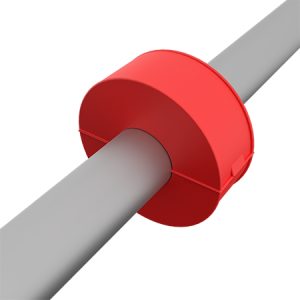
POLYPROPYLENE FLANGE PROTECTOR
-

POLYPROPYLENE FIBER SAFETY GUARD
-

SAFETY GUARD WITH PVC SIGHT GLASS
-

SAFETY GUARD WITH TEFLON FIBER
Industrial accessories complete the pipeline around the valve. KTN Valves manufactures and supplies Y-strainers that trap particles, expansion joints that absorb thermal movement and vibration, sight glasses that show the fluid and safety spray shields that contain flange leaks, together with an in-house PTFE lining service.
| Item | KTN industrial accessories |
|---|---|
| Manufacturer | KTN Valves (Kara Technology News, S.L.), Rubí (Barcelona), Spain |
| Product families | Y-strainers, expansion joints, sight glasses and flange spray shields |
| Materials | Forged carbon steel, stainless steel, PP, PVC, pure PTFE, braided PTFE, galvanised steel and EPDM |
| Connections | ANSI B16.5 flange class 150-300, DIN EN 1092-1 flange PN10-PN40, BSP thread (ISO 228) and NPT thread (ASME B1.20.1) |
| Strainers | Interchangeable basket or screen; body in stainless steel, carbon steel, PP or PVC |
| Expansion joints | EPDM rubber body with flanges; absorb expansion, vibration and misalignment |
| Sight glasses | Toughened glass up to 230 °C; PTFE-lined version with DIN or ANSI flanges |
| Services and certification | PTFE lining on request, ISO 9001, Bureau Veritas, certificate of origin |
What industrial accessories are and what they do
Industrial accessories are the in-line components that protect the valve, the pump and the operator. The strainer traps the particles that score seats and impellers. The expansion joint absorbs the movement and vibration that would otherwise load the flanges. The sight glass shows whether fluid is flowing and in what condition. The spray shield contains the jet when a gasket fails.
Types of accessory we manufacture
- Strainers: Y-type strainer with flanged or threaded connection, body in stainless steel, carbon steel, PP or PVC, with interchangeable basket.
- Expansion joints: flanged rubber expansion joints with EPDM rubber body, for thermal expansion, pump vibration and misalignment.
- Sight glasses: Flanged or threaded connection, toughened glass up to 230 °C, PTFE-lined version available.
- Safety spray shields: anti-leak covers for flanged joints, in PP, PVC, pure PTFE or braided PTFE, with or without leak indicator window.
Materials: matching the accessory to the fluid
Material selection starts with chemical compatibility and then with service temperature. A strainer that lasts years on cold water is destroyed in weeks by concentrated acid.
| Material | Typical service | Practical limit |
|---|---|---|
| PP | Dilute acids and alkalis, demineralised water | Around 80 °C; unsuitable with solvents |
| PVC | Water, brine and dilute acids | Around 60 °C |
| Pure PTFE | Almost any chemical, including concentrated acids | Inert; around 200 °C |
| Braided PTFE | Flexible shields for flanges in corrosive service | Light woven fabric for large flanges |
| Stainless steel AISI 316/316L | General chemical duty, steam, treated water and food | Avoid hot chlorides (pitting) |
| Forged carbon steel | Steam, thermal oil and hydrocarbons | Not for seawater or acids |
| Galvanised steel | Cold water, compressed air and fire mains | Above 60 °C the zinc stops protecting the steel |
| EPDM | Hot water, steam, caustic soda and dilute acids | Not compatible with hydrocarbons or mineral oils |
PTFE lining service
KTN lines accessories and bodies with PTFE for fluids that attack metal. The lining adds the mechanical strength of steel to the chemical inertness of PTFE, and avoids building the whole part in plastic. It is applied to sight glasses with DIN or ANSI flanges and to other components made to drawing. The same principle drives the KTN 123T jacketed ball valve, with a PFA internal lining.
Connections and standards
KTN accessories are supplied with ANSI B16.5 class 150 and 300 flanges, DIN EN 1092-1 flanges from PN10 to PN40, BSP threads to ISO 228 and NPT threads to ASME B1.20.1. The accessory flange must match the pipe flange in standard, nominal pressure and facing type. For diameter equivalences use the DN to inches conversion table, and for facing types the guide to flange face types.
How to select the accessory
The decision order is function, fluid, temperature and pressure, material, connection and lining. For strainers, mesh size follows the equipment protected: a finer mesh traps more particles, raises pressure drop and forces more frequent cleaning. For expansion joints, movement comes from the real expansion of the line: carbon steel grows about 1.2 mm per metre per 100 °C, AISI 316 about 1.6 mm. A rubber expansion joint absorbs more movement in less length than a metal expansion loop, at a lower temperature limit.
Applications and industries
KTN supplies industrial accessories to petrochemical, chemical, oil & gas, power generation, steam and thermal oil, water treatment and desalination, food and beverage, pharmaceutical, pulp and paper, mining, marine and HVAC plants. Desalination combines PP or PVC bodies with PTFE flange shields. On pump suction, a Y-strainer upstream plus an expansion joint isolates vibration.
Buying accessories direct from the manufacturer
KTN sells direct to end users and distributors, with no middleman. Common materials and sizes are held in stock for immediate dispatch, and special executions are made to drawing at the Rubí factory. Every order includes a certificate of origin, and 3.1 material certificates are issued on request. State the fluid, DN, pressure, temperature and connection to receive a quotation.
Why KTN
KTN Valves (Kara Technology News, S.L.) produces in its own facilities in Rubí, Barcelona, under an ISO 9001 quality system and with Bureau Veritas inspection. Ordering valves and accessories from the same manufacturer leaves one bill of materials, flanges that match in standard and nominal pressure, and one party responsible on site.
Related categories
The valves these accessories protect are in ball valves, butterfly valves and check valves. To measure pressure and temperature on the same line, see industrial instrumentation. For automatic operation, see valve automation. The complete range is in industrial valves.
Frequently asked questions
Where should a Y-strainer be installed?
Upstream of the equipment it protects: pump, meter, control valve or heat exchanger. On horizontal pipe the basket points downwards or sideways, never upwards. On vertical pipe, flow must run downwards. Clean it when pressure drop rises above the clean-filter value.
Which material should I choose for acid service?
Dilute acids at ambient temperature are handled by PP or PVC. For concentrated acids the answer is pure PTFE or a steel part lined with PTFE, which combines mechanical strength with chemical inertness. AISI 316 stainless steel copes with general chemical duty but pits in hot chlorides.
What does a rubber expansion joint do?
It absorbs thermal expansion, pump vibration and small misalignments between pipe runs, so those forces do not load flanges and equipment. The body is EPDM with flanges, suitable for hot water and steam, and not compatible with hydrocarbons or mineral oils.
What is a safety spray shield?
It is a cover wrapped around a flanged joint that contains the fluid jet if the gasket fails. KTN makes them in PP, PVC, pure PTFE and braided PTFE, with or without a leak indicator window that shows the leak before anyone approaches the flange.
Do you offer PTFE lining to order?
Yes. KTN offers a PTFE lining service for accessories and bodies used with corrosive fluids, plus PTFE-lined sight glasses with DIN or ANSI flanges. The same technique is used on the KTN 123T jacketed ball valve, which carries a PFA internal lining.
Ask a quotation
Request a quote for butterfly valves: tell us the DN, material, mounting type (wafer, lug or clamp), seat, pressure and temperature and we will send you a customized offer with the best price and lead time.