


Valve automation
-

SINGLE ACTING PNEUMATIC SLANTED SEAT VALVE
-

SOLENOID VALVE 3/2 WAY AND 5/2 WAY NAMUR
-

INDUCTIVE LIMIT SWITCH BOX 1/2
-

ELECTROMECHANICAL LIMIT SWITCH BOX
-

SINGLE ACTING PNEUMATIC ACTUATOR
-
DOUBLE ACTING PNEUMATIC ACTUATOR
-
INDUCTIVE LIMIT SWITCH BOX FOR HIGH VOLTAGE
-

ATEX 1/2 INDUCTIVE LIMIT SWITCH BOX
-
PNP INDUCTIVE LIMIT SWITCH BOX
-
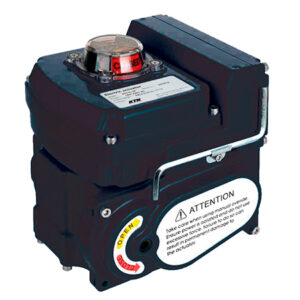
COMPACT ELECTRIC ACTUATOR
-
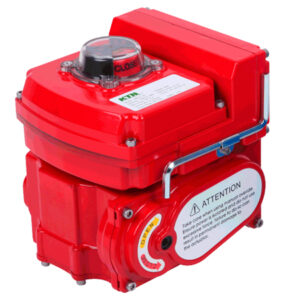
SCOTCH YOKE ELECTRIC ACTUATOR
-
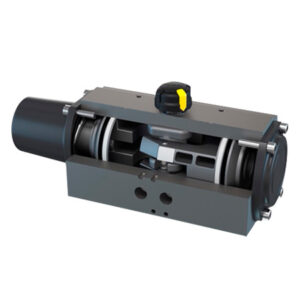
PNEUMATIC SCOTTISH YOKE ACTUATOR
Valve automation replaces the lever or handwheel with a pneumatic or electric actuator mounted on the ISO 5211 interface, together with a NAMUR solenoid valve and a limit switch box. KTN Valves builds and supplies the assembly from Rubí (Barcelona, Spain), mounted and tested on the valve before despatch.
| Item | KTN valve automation |
|---|---|
| Manufacturer | KTN Valves (Kara Technology News, S.L.), Rubí (Barcelona), Spain |
| Pneumatic actuators | Single acting with spring return and double acting, scotch yoke and compact designs |
| Electric actuators | Compact and scotch yoke, for plants without a compressed air network |
| Accessories | NAMUR solenoid valves 3/2 and 5/2 way; limit switch boxes in mechanical, inductive, PNP, high voltage and ATEX versions; pneumatic angle seat valve |
| Mounting interface | ISO 5211 top flange, sizes F03 to F16, square or star drive coupling |
| Supply | Clean dry instrument air at 4-7 bar; electrical supply according to execution |
| Failure mode | Single acting returns to a safe position by spring; double acting holds the last position |
| Certification | ISO 9001, Bureau Veritas inspection, certificate of origin, ATEX executions to Directive 2014/34/EU |
What valve automation is and why it pays
Automating a valve means operating it from the plant control system with no operator at the line. The actuator supplies the torque, the solenoid valve turns the PLC signal into air pressure, and the limit switch box reports the real position back. Four reasons justify it: safety, when a power or air failure must drive the valve to a known position; cycling; torque in large diameters; and access, for valves at height, buried or inside a hazardous area.
Components we manufacture and supply
- Pneumatic actuators: single acting with springs and double acting, scotch yoke for high torque and compact for tight spaces.
- Electric actuators: compact and scotch yoke, for plants without instrument air.
- NAMUR solenoid valves: 3/2 way for single acting and 5/2 way for double acting, mounted directly on the actuator.
- Limit switch boxes: mechanical, inductive, PNP, high voltage and ATEX versions for hazardous areas.
- Pneumatic angle seat valve: single acting with spring return and minimum pressure loss.
Single acting or double acting: setting the fail-safe position
A single acting actuator carries springs that drive the valve to a safe position when air or power is lost. Specify fail-close where the risk is continuing to feed fluid, and fail-open where blocking a relief line or a coolant supply is worse. A double acting actuator uses air on both sides, delivers more torque for the same body size and holds the last position on failure.
ISO 5211 interface and torque sizing
ISO 5211 standardises the valve top flange and the actuator coupling, with sizes F03 to F16 and square or star drive. With that interface any correctly sized actuator bolts on without fabricated brackets. Sizing starts from the valve breakaway torque under real service conditions, never from the dry bench figure. KTN then applies a safety factor of 25 % to 50 %, rising towards 100 % with metal seats, dirty or abrasive media, or valves that operate rarely. Torque is checked at the guaranteed minimum air pressure of the network.
NAMUR solenoid valves, position feedback and ATEX
The solenoid valve mounts straight onto the actuator following the NAMUR interface (VDI/VDE 3845), which removes tubing, fittings and leak points. A 3/2 way solenoid suits single acting actuators, a 5/2 way suits double acting ones. The limit switch box confirms open and closed to the PLC: mechanical contacts for basic logic, inductive or PNP sensors for status signals, high voltage versions for direct switching, and ATEX executions to Directive 2014/34/EU in classified areas. Without feedback the system commands the stroke but never confirms it.
How to select your automation package
The decision order is fixed: breakaway torque and safety factor, available energy (instrument air or electrical supply), fail-safe position required by the process, ISO 5211 flange size and coupling, type of position feedback, and area classification. Send valve type, DN, differential pressure and fluid, and KTN sizes the package.
Applications and industries
KTN automates valves for petrochemical, chemical, oil & gas, power, steam and thermal oil, water treatment and desalination, food and beverage, pharmaceutical, pulp and paper, mining, marine and HVAC plants. Hygienic processes use actuated ball and butterfly valves with clamp ends in polished 316L; explosive atmospheres use ATEX limit switch boxes.
Automating direct with the manufacturer
KTN mounts actuator, solenoid valve and limit switch box on its own ball, butterfly and globe valves, and tests every assembly before despatch. Actuators are also supplied loose for valves already installed with an ISO 5211 top flange. Common sizes ship from stock, every order carries a certificate of origin, and special brackets are machined to drawing. Distributor enquiries are welcome.
Why KTN
KTN Valves (Kara Technology News, S.L.) manufactures industrial valves in Rubí, Barcelona, under an ISO 9001 quality system with Bureau Veritas inspection. Buying valve and automation from one manufacturer avoids the split-supply problem: wrong torque calculation, a coupling that does not fit, and shared blame when the valve fails to close. KTN delivers the assembly tested, with certificate of origin and 3.1 material certificate on request.
Related categories
Base valves sit in ball valves, butterfly valves and globe valves. For continuous modulation with a positioner, see control valves. Transmitters and gauges are in instrumentation, and the full range in industrial valves.
Frequently asked questions
What actuator torque do I need for my valve?
Start from the valve breakaway torque under real service conditions, not the dry bench value, and add a safety factor of 25 % to 50 %. With metal seats, dirty media or valves that operate rarely, go up towards 100 %.
Single acting or double acting?
Choose single acting when the process needs a defined position on loss of air or power: the springs drive the valve closed or open. Choose double acting when holding the last position is acceptable and more torque per size matters.
Can I automate a valve that is already installed?
Yes, if the valve has an ISO 5211 top flange the correctly sized actuator bolts straight on. Where that flange is missing, KTN machines the bracket and coupling to drawing. Provide make, valve type, DN and service pressure to confirm torque and interface.
Which solenoid valve goes with which actuator?
A 3/2 way NAMUR solenoid controls single acting actuators and a 5/2 way controls double acting ones. Both mount directly on the actuator to VDI/VDE 3845, with no tubing or fittings in between.
Do you supply ATEX executions for hazardous areas?
Yes. KTN supplies limit switch boxes in ATEX execution to Directive 2014/34/EU for explosive atmospheres. State the zone, the gas or dust group and the temperature class of the location to select the correct execution.
Ask a quotation
Request a quote for butterfly valves: tell us the DN, material, mounting type (wafer, lug or clamp), seat, pressure and temperature and we will send you a customized offer with the best price and lead time.